I’ve realized that Transatlantic vs. Transpacific: Either Way, I’m Not Cooking isn’t just a catchy title; it’s a retired cruiser’s truth. Life is better when slowly floating between continents, preferably with a soft-serve ice cream machine nearby.
Whether Steve and I are floating across the Atlantic or the Pacific, one thing remains the same: no grocery shopping, no dishes, and not single pot or pan in sight. Here’s the thing: I love to cook, I enjoy cooking, and I always have, but vacation is vacation from all tasks.
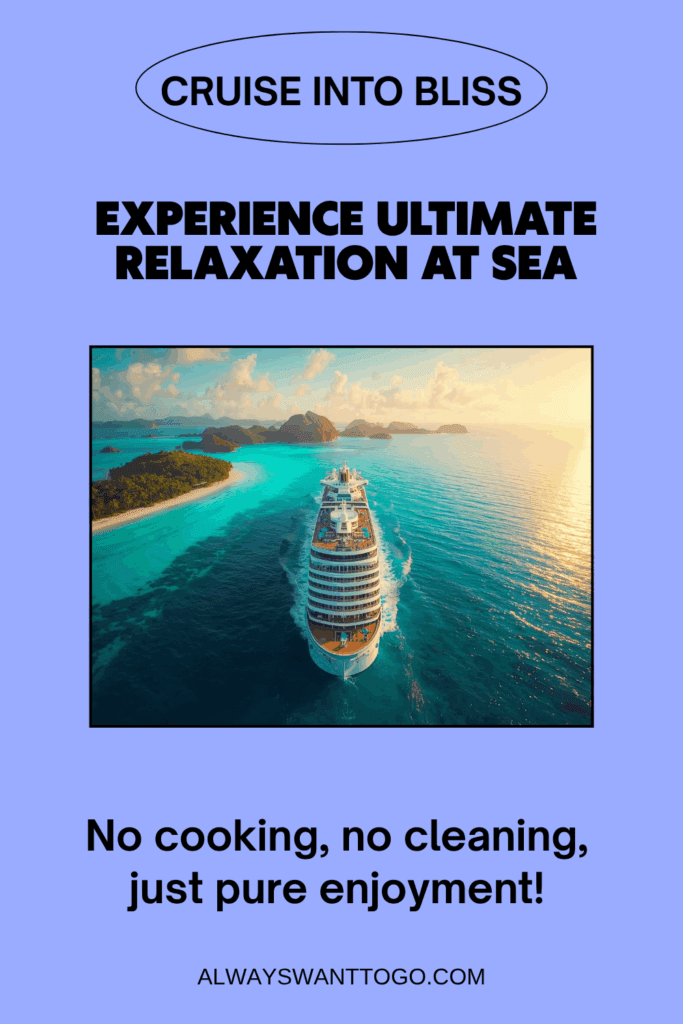
Each crossing has its flavor, rhythm, and collection of moments where you ask, “Wait, what day is it again?” But if you’re a fellow retiree wondering whether to go eastbound Atlantic or westbound Pacific, let me offer my perspective.
The Itineraries: Ports, Glaciers, and International Surprises
Let’s start with the transpacific because it’s long, scenic, and full of unexpected thrills (like trying to remember what day it is after crossing the International Date Line).
At 23 days, our first transpacific was pretty far up in the wow department. We left Seattle and cruised to Hawaii–three islands in total–before heading west across seven uninterrupted sea days (you read that right, seven), crossing the Date Line, and pulling into Suva and Denarau, Fiji, before finishing in Sydney, Australia. That cruise felt like an episode of Survivor: Floating Edition, except instead of coconut water, we had cocktail service.
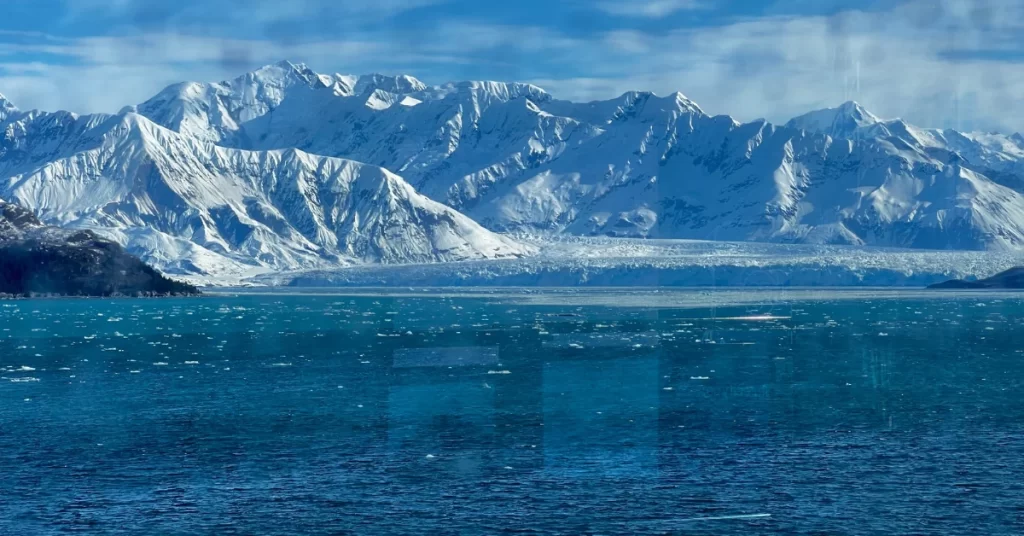
Our next transpacific cruise was a 31-day extravaganza from Brisbane to Seattle. It was the perfect excuse to dodge responsibilities for an entire month. Three sea days kicked things off (also known as “spa mode activation”), followed by unforgettable ports of call, including Guam, Okinawa, Hiroshima, Tokyo, Aomori, and Kushiro. From there, we sailed to Alaska, cruised past Hubbard Glacier, and stopped in Juneau and Ketchikan before arriving in Seattle.
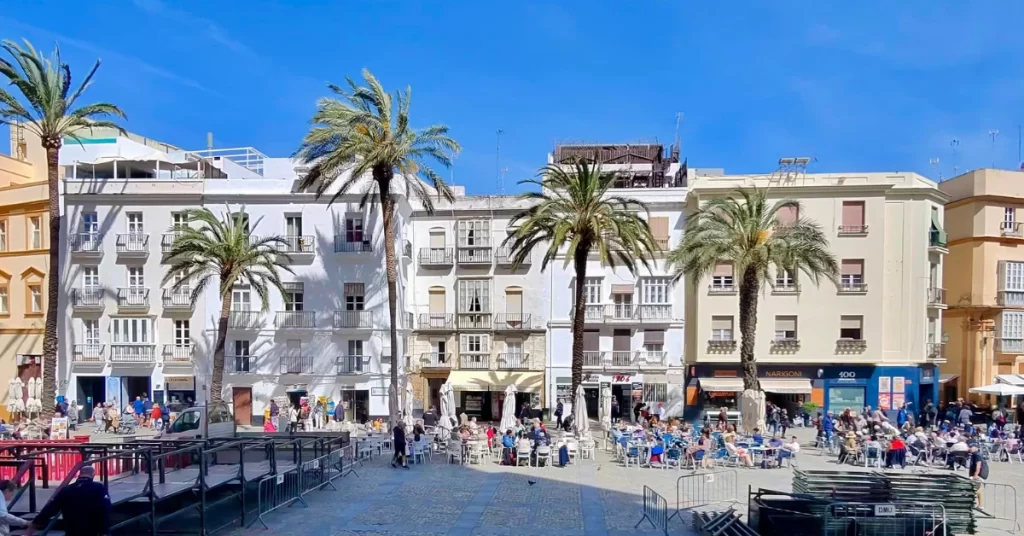

Our transatlantic cruises, by contrast, are more historic charm than tropical adventure. We have cruised across the Atlantic from the US to Europe and back again from Europe to the US. Each time, we explored elegant ports like Málaga and Cádiz. We also wandered through the rugged beauty of the Azores, stopped in Bermuda, and landed in Florida and Galveston another time. It was shorter than our Pacific adventures but full of European flavor and enough cathedrals to count as cultural cardio.
Sea Days: The Kitchen is Closed, the Deck is Open
It is on the sea days when the “I’m Not Cooking” lifestyle shines.
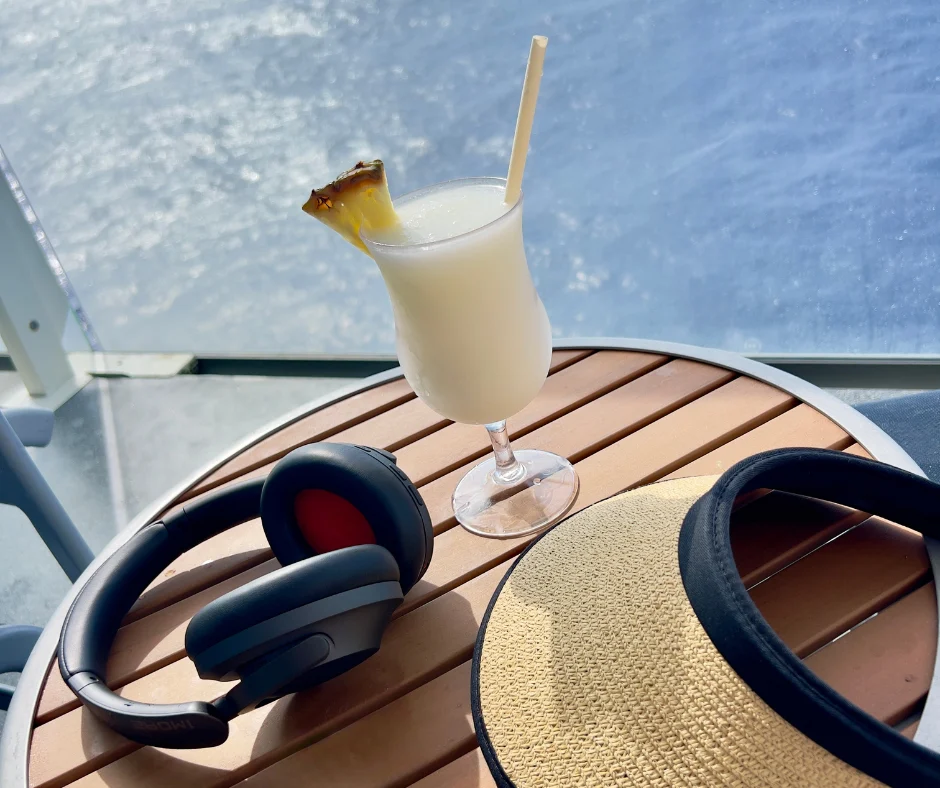
Transpacific cruises offer loads of them. On our 31-day journey, there were entire stretches of nothing but sea, sunrise, and buffet lines. We read books. We walked laps. Trivia was not our thing, but many played it like a competitive sport. We napped, got massages, drank coffee on the balcony, and, most importantly, did not cook a single thing. I could live like that forever.
Transatlantic crossings offer fewer sea days, but still enough to feel that glorious sense of timelessness. They tend to be broken up by port visits, so there’s more sightseeing and walking and fewer chances to complete a jigsaw puzzle in one day. Either way, the buffet was always open, and the only thing I stirred was my coffee.
The Ports: Towel Animals or Tapas?
Ports on a transatlantic crossing are generally steeped in history: narrow streets, majestic architecture, and more museums than you can politely breeze through in an afternoon. Think Spanish tapas, Portuguese wine, and Azorean landscapes that look photoshopped.
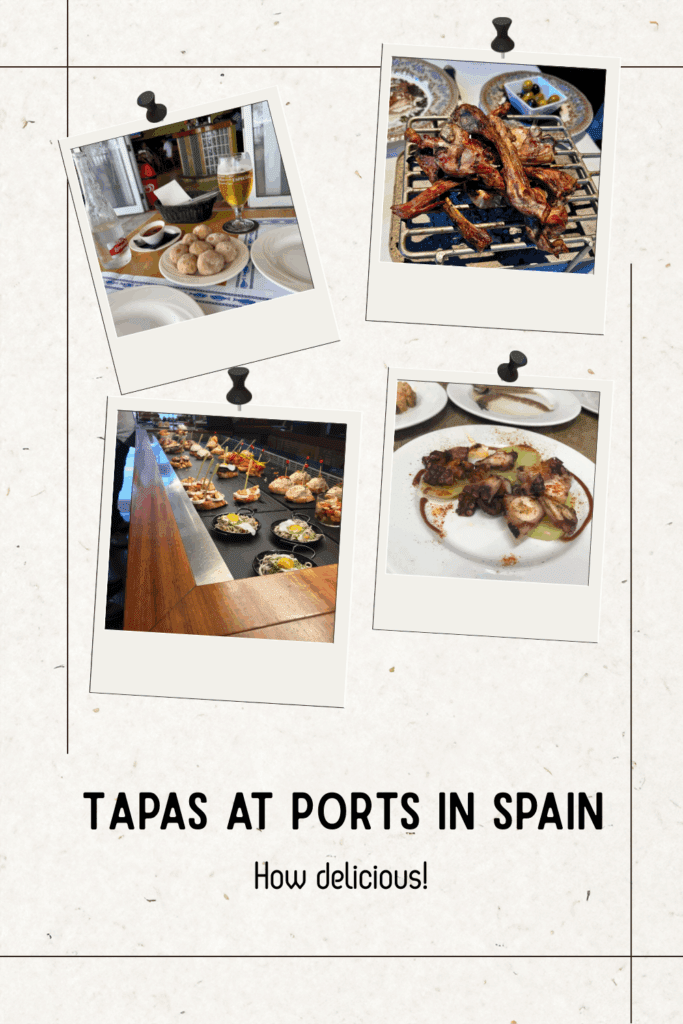
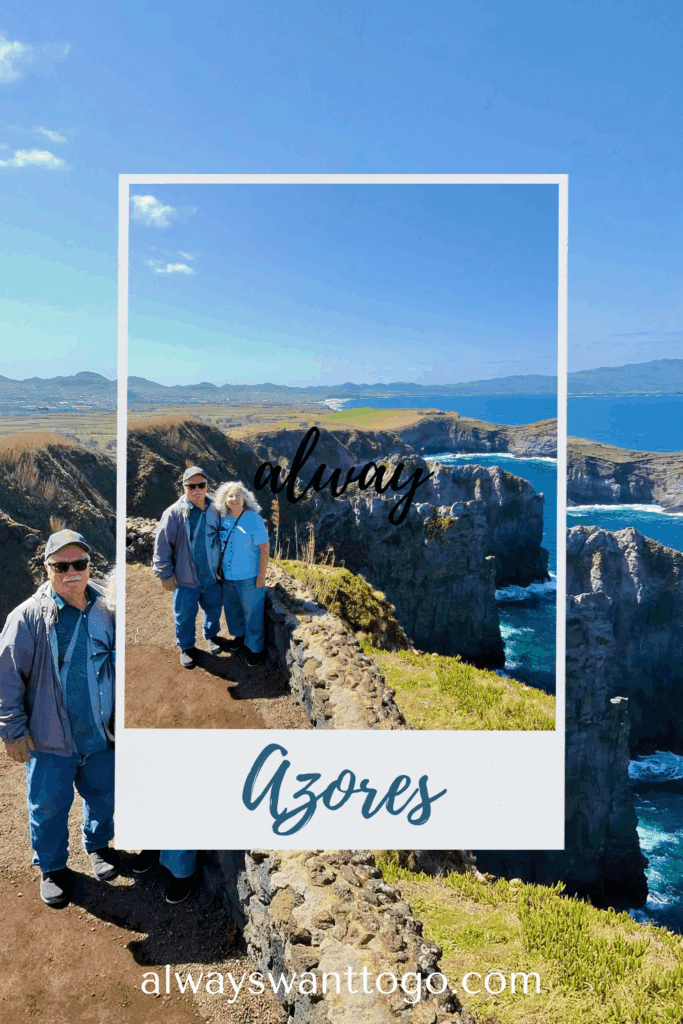
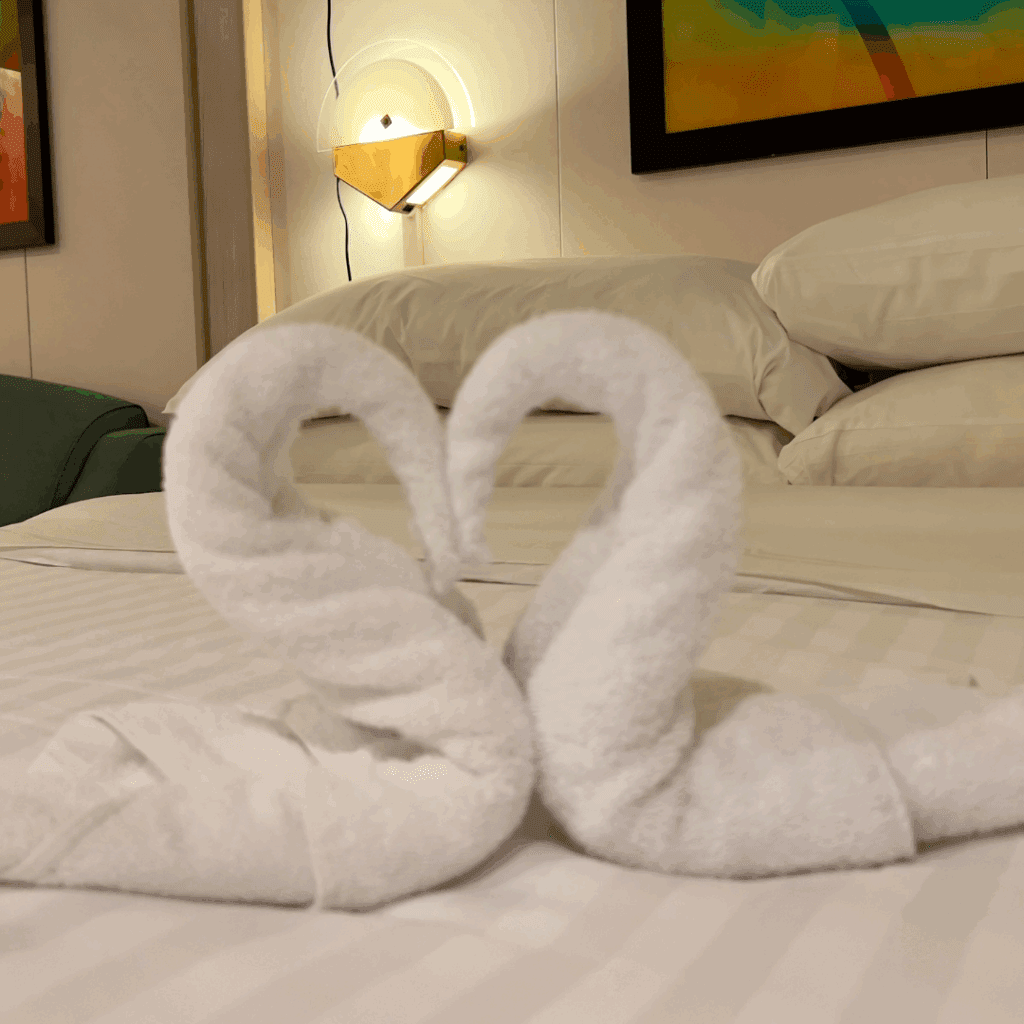
In contrast, transpacific ports are diverse and exotic. You get volcanic islands, Pacific atolls, samurai castles, Fijian dancers, and the chance to say, “Oh, look, another paradise!” These stops feel more adventurous, less structured, and more likely to leave sand in your shoes.
Either way, there’s one universal truth: returning to the ship and not having to cook dinner after a day out is a chef’s kiss.
The Shellback Ceremony: From Pollywog to Proud Retiree
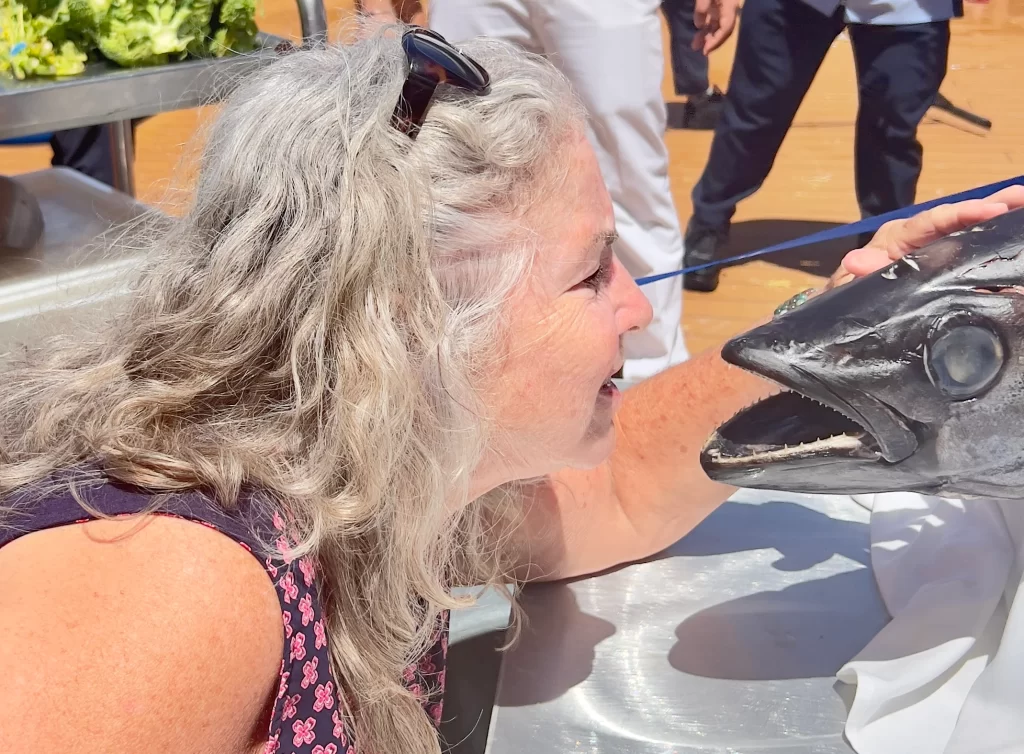
Now, let’s talk about one of the most delightfully weird experiences at sea–the Shellback Ceremony, which happens when you cross the equator on a ship.
When we crossed the equator on our Seattle-to-Sydney crossing, Steve and I were just innocent “Pollywogs.” But cruise tradition dictated we become “Shellbacks,” which meant an initiation involving saved-up food scraps, lots of cooked spaghetti noodles, raw eggs, and a very regal-looking King Neptune and his court. Thank goodness officers and staff took the hit for all as cruise passengers looked on, cameras snapping away.
It’s silly, messy, and oddly heartwarming—like summer camp for retirees, only with better food and orthopedic sandals. Part of this ceremony is “kissing the fish,” symbolizing a devotion to the sea, an ancient maritime tradition.
The International Date Line: Where Did Wednesday Go?
The International Date Line is the Bermuda triangle of calendars. We crossed it twice on our transpacific cruises, and a day just disappeared each time. Poof! Gone.
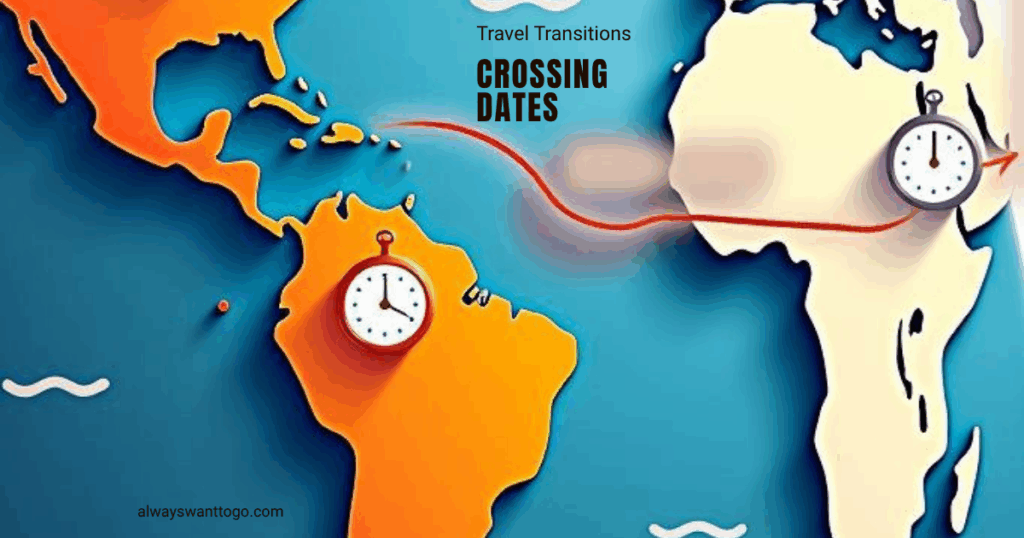
Imagine going to bed on Tuesday and waking up on Thursday, without recollecting what happened on Wednesday. Did it even exist? Was it spent in the buffet? Did we nap through it? Nobody knows.
The cruise staff usually throws a themed event, but let’s be honest—we were too busy doing absolutely nothing to notice we lost a day. And, again, we didn’t have to cook—not even once.
Social Life at Sea: Friends, Fun, and Fewer Responsibilities
Long cruises become their own little floating communities with all those sea days. We met other retired cruisers who had stories that made ours sound tame, and we were delighted to hear the many tales of “cruising across the ocean” from our fellow passengers. You get to know folks at dinner, trivia, line dancing, or just waiting for omelets in the morning.
Again, whether we were comparing ports or which dining venue had the better desserts, it felt like a grown-up summer camp, but instead of bunk beds, we had private balconies. And just as in summer camp, we made friends that will last a lifetime.
Transatlantic vs. Transpacific Cruises – my opinion
Transatlantic Cruises
- Typical Route: Europe (Spain, UK, Italy) — East Coast US (Florida, NYC)
- Ocean: Atlantic
- Length 7-14 days, sometimes longer
- Sea Days: Often 5-7 consecutive sea days
- Ports: Fewer, but can include the Mediterranean, the Canary Islands, the Azores, or the Caribbean
- Season: Mostly spring (eastbound) and fall (westbound)
- Weather: Can be choppy in the mid-Atlantic; cooler in the shoulder season
- Vibe: International crowd; slightly more formal
- Perks:
- Lower fares on repositioning cruises
- Amazing sunrises/sunsets
- Great for relaxing and unplugging
- Challenges:
- Jet lag going east
- Fewer ports = possible cabin fever
Transpacific Cruises
- Typical Route: US West Coast — Asia or Australia (often via Hawaii)
- Ocean: Pacific
- Length: 15- 30+ days
- Sea Days: Many, often 8+ in a row
- Ports: Often include Hawaii, the South Pacific, Japan, and Alaska
- Season: Spring and fall repositioning; fewer sailings
- Weather: Generally calmer seas; more tropical
- Vibe: Laid-back, exploratory, more bucket-list energy
- Perks:
- Exotic ports with a rich history
- More effortless westbound time zone adjustment
- Ideal for seasoned travelers
- Challenges:
- Longer time commitment
- Jet lag on return
- Flight logistics can be tricky or costly, and such long flights
Final Thoughts: The Only Thing I’m Making is a Reservation
If you want rich history, Old World charm, and slightly fewer sea days, go for the transatlantic. Choose the transpacific if you wish to visit tropical islands, ocean horizons, equator-crossing antics, and an extended break from real life. Either one will be a fantastic voyage.
Better yet–do both. And pack stretchy pants.
Have you done a transoceanic cruise yet, or both? Leave your thoughts below. Just don’t ask me what day it is. I’m still somewhere between Fiji and the buffet line.


Guess I’ll have to try at least one multi-day at sea trip to see if I can really relax!